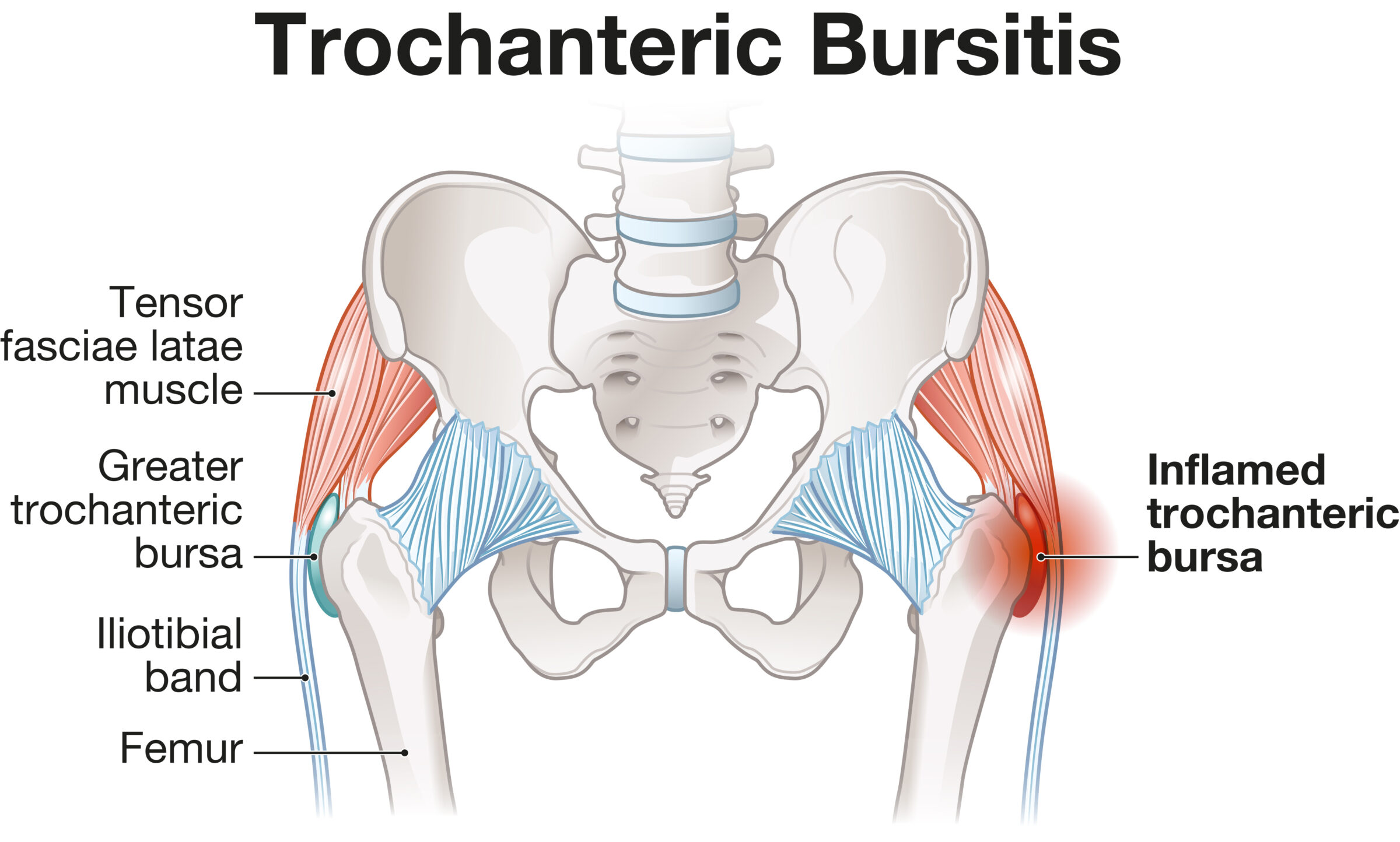
Greater Trochanteric Pain Syndrome (GTPS / Trochanteric Bursitis)
Greater trochanteric pain syndrome causes discomfort over the outer hip, often making it uncomfortable to lie on that side. Many patients notice soreness during walking, climbing stairs, standing for prolonged periods, or when moving the hip in certain ways. The gluteus medius and minimus tendons are commonly involved, and the bursa may become inflamed, particularly with repetitive or prolonged activity.
Understanding GTPS
This condition occurs when the tendons and bursa around the outer hip become irritated or inflamed. Over time, this can lead to pain, reduced mobility, and difficulty with daily activities that require standing, walking, or side-lying positions. Early assessment and targeted management can significantly improve comfort and function.
Assessment at The London Ultrasound Clinic
Your appointment includes a hands-on assessment of hip movement and a high-resolution ultrasound scan. This allows us to evaluate the gluteal tendons, trochanteric bursa, and surrounding soft tissues, identifying the true source of your pain and guiding a personalised treatment plan.
Conservative Management
Many patients experience meaningful relief through conservative care, which is typically the first line of treatment:
- Activity modification and pacing to reduce hip strain
- Targeted gluteal strengthening exercises to support tendon and hip function
- Advice on posture, walking technique, and load management
- Education and reassurance about the condition and expected recovery
These measures often reduce pain, improve function, and allow a safe return to everyday activity without invasive procedures.
Ultrasound-Guided Injection
If symptoms persist despite conservative management, an ultrasound-guided injection using steroid and local anaesthetic can be highly effective. Ultrasound guidance ensures precise placement into the affected tendon or bursa, reducing inflammation, relieving discomfort, and supporting improved hip movement.
Recovery and Ongoing Care
After treatment, your clinician will provide a structured rehabilitation programme focusing on safe strengthening, mobility, and gradual return to activity. Most patients notice gradual improvement in pain, comfort when lying on the affected side, and functional movement over the following weeks.
Our goal is to provide a premium, personalised approach, combining expert assessment, precise treatment, and practical guidance to help you regain hip comfort, restore function, and enjoy everyday activities with confidence.