Achilles Tendinosis
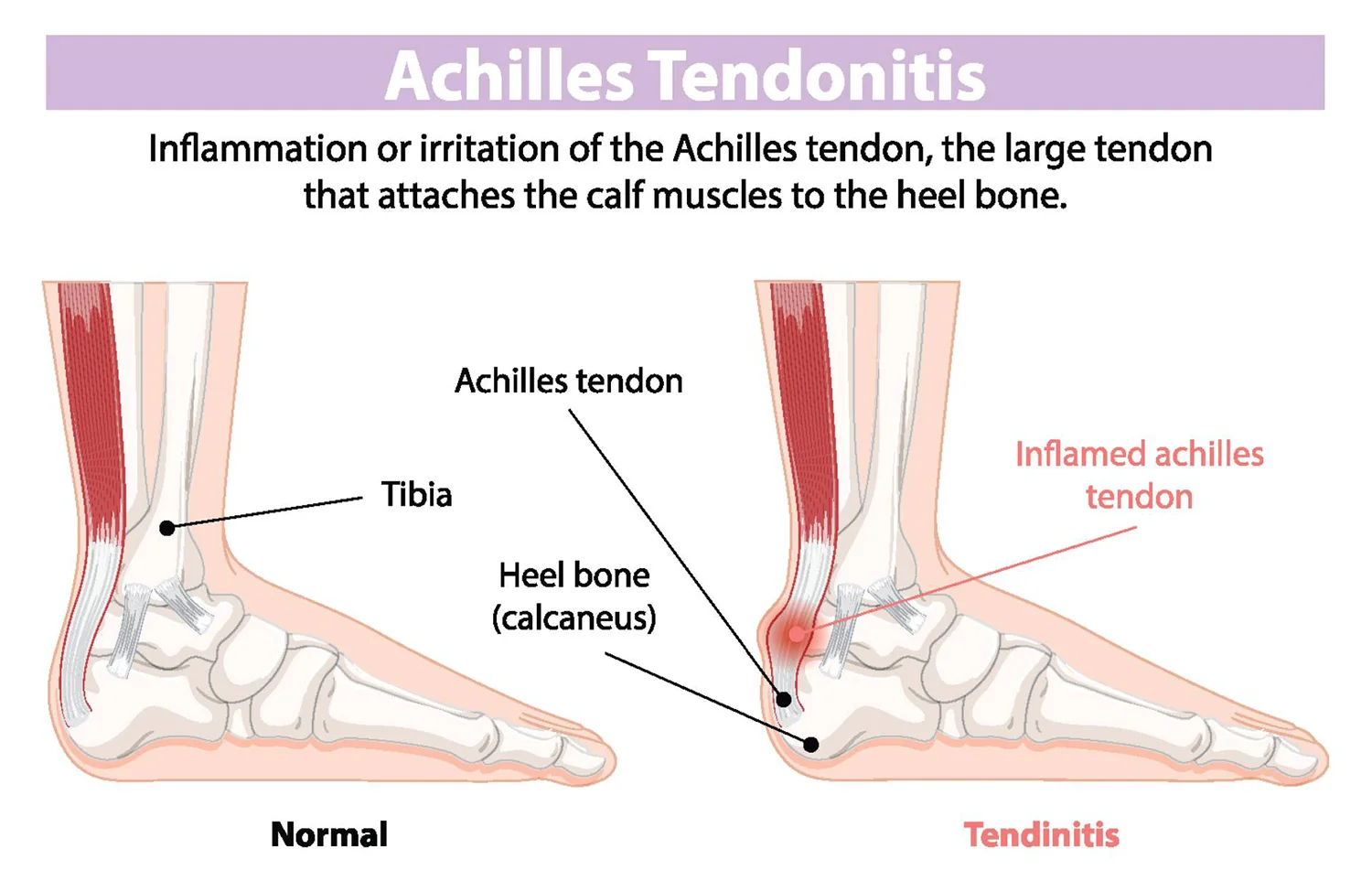
Achilles tendinosis typically causes pain and stiffness at the back of the ankle, especially with the first few steps in the morning or after periods of increased activity. Many patients notice a thickened or lumpy area in the tendon, or a persistent tightness that does not improve with stretching. Over time, this can make walking, running, or even standing for long periods uncomfortable.
Assessment at The London Ultrasound Clinic
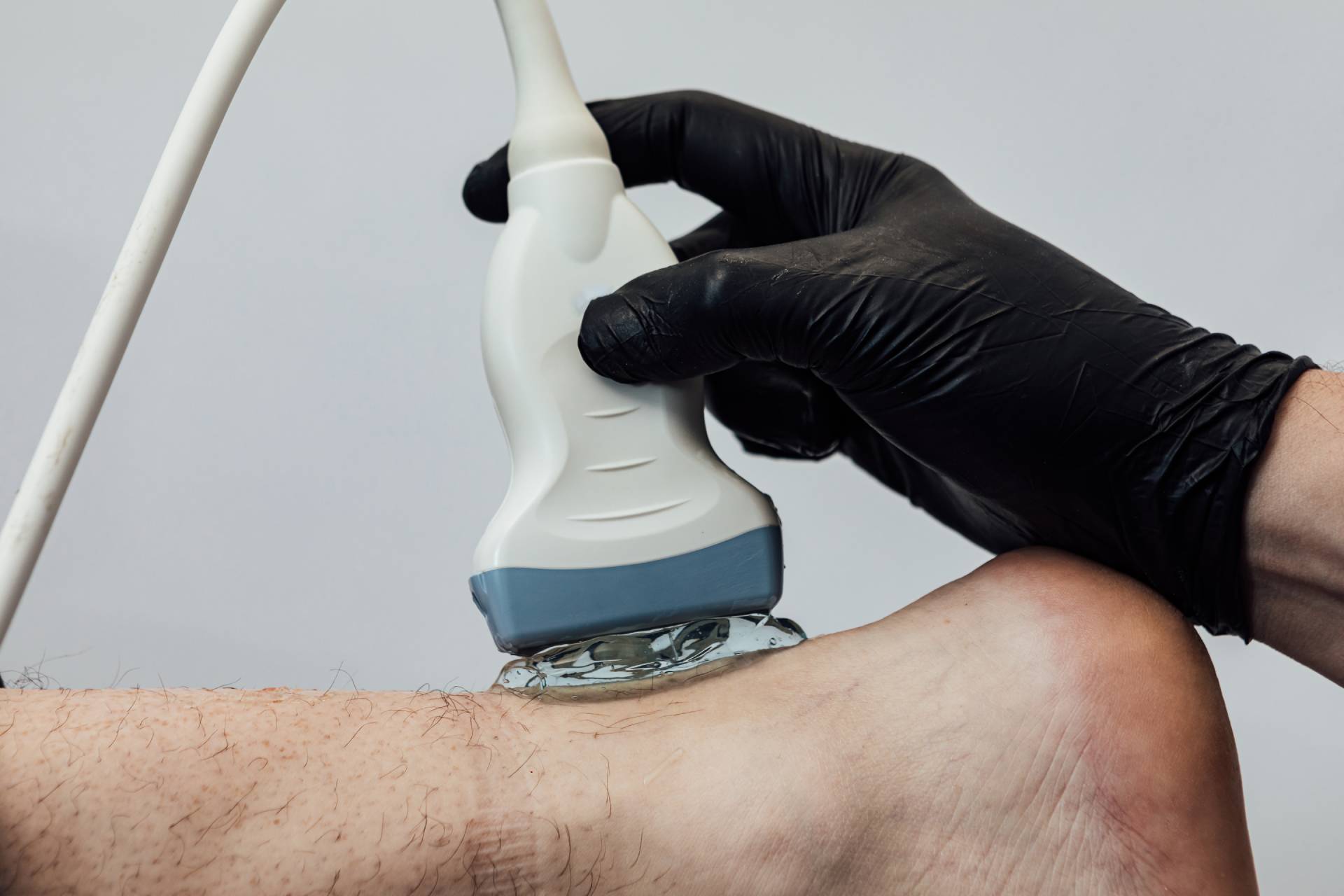
Your appointment includes a hands-on assessment of the ankle and Achilles tendon, along with a high-resolution ultrasound scan. This allows us to evaluate tendon thickening, areas of degeneration, and any associated bursitis or tendon sheath irritation. Understanding the tendon’s condition helps guide safe loading and appropriate management.
Conservative Management
Initial management often focuses on:
- Activity modification to reduce tendon overload
- Structured loading exercises and eccentric strengthening programmes
- Advice on footwear and calf flexibility
- Education about tendon healing and realistic expectations
These approaches often help reduce pain and improve function without the need for injection.
Ultrasound-Guided Injection
When symptoms persist despite conservative care, a high-volume ultrasound-guided injection can be considered. The injection contains local anaesthetic and saline, and in some cases steroid, and is placed precisely around the tendon. This reduces pain, allows rehabilitation to progress safely, and maximises treatment effectiveness.
Recovery and Ongoing Care
Following assessment and any injection, your clinician will provide clear guidance on progressive loading, strengthening, and safe exercise. Most patients notice gradual improvement in pain and function over the following weeks. The aim is to restore comfort, rebuild tendon strength, and support long-term tendon health, allowing a confident return to usual activities and sport.