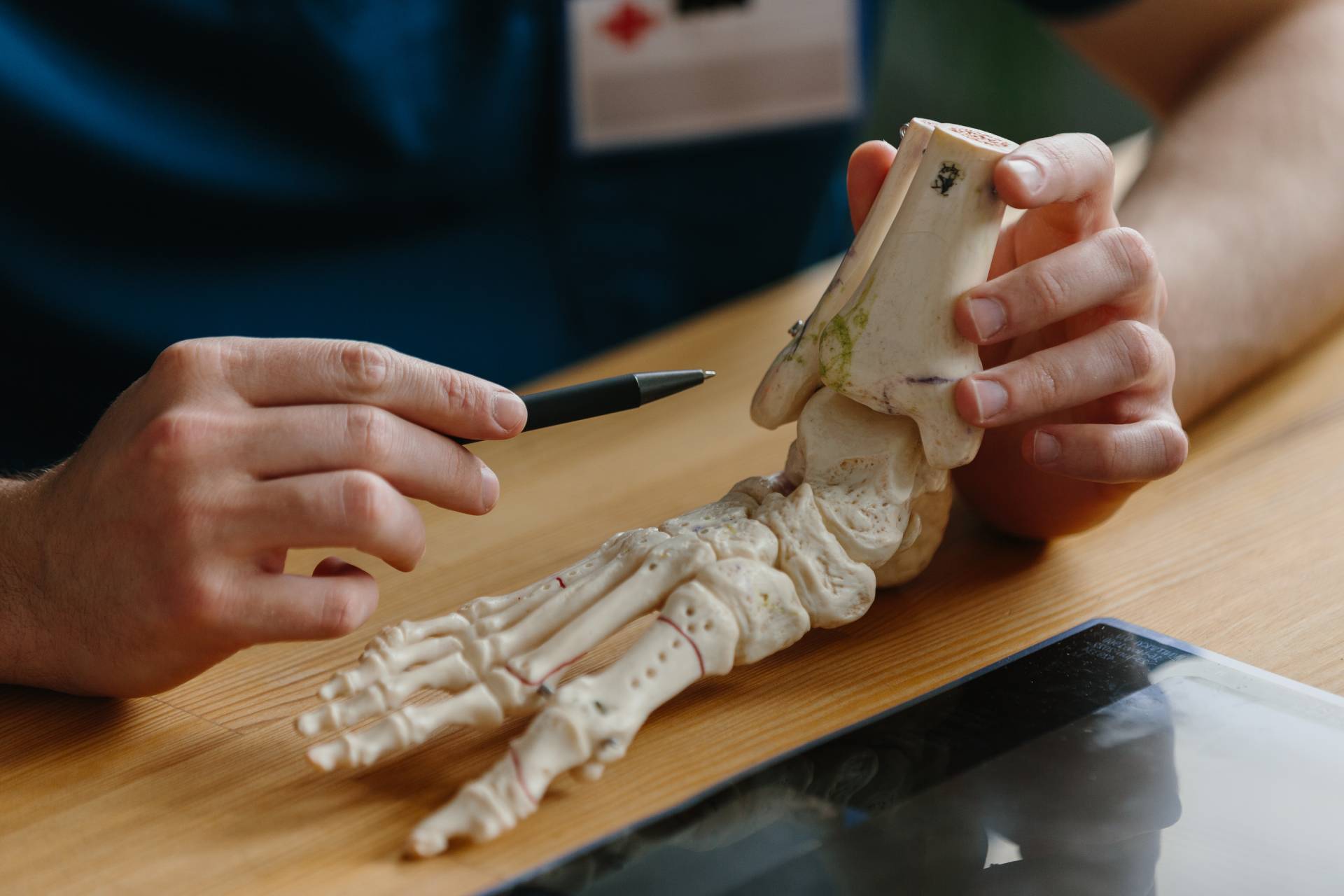
Ankle Osteoarthritis
Ankle osteoarthritis can cause stiffness, swelling, and a deep ache around the joint, particularly when walking on uneven ground or standing for long periods. Many patients notice a sharp twinge when stepping off a kerb or difficulty first thing in the morning when the joint feels tight and heavy.
Understanding Ankle Osteoarthritis
Osteoarthritis occurs when the cartilage lining the ankle joint gradually wears down, leading to pain, inflammation, and reduced movement. Addressing inflammation and supporting the surrounding muscles can help reduce discomfort, improve function, and maintain long-term joint health.
Assessment at The London Ultrasound Clinic
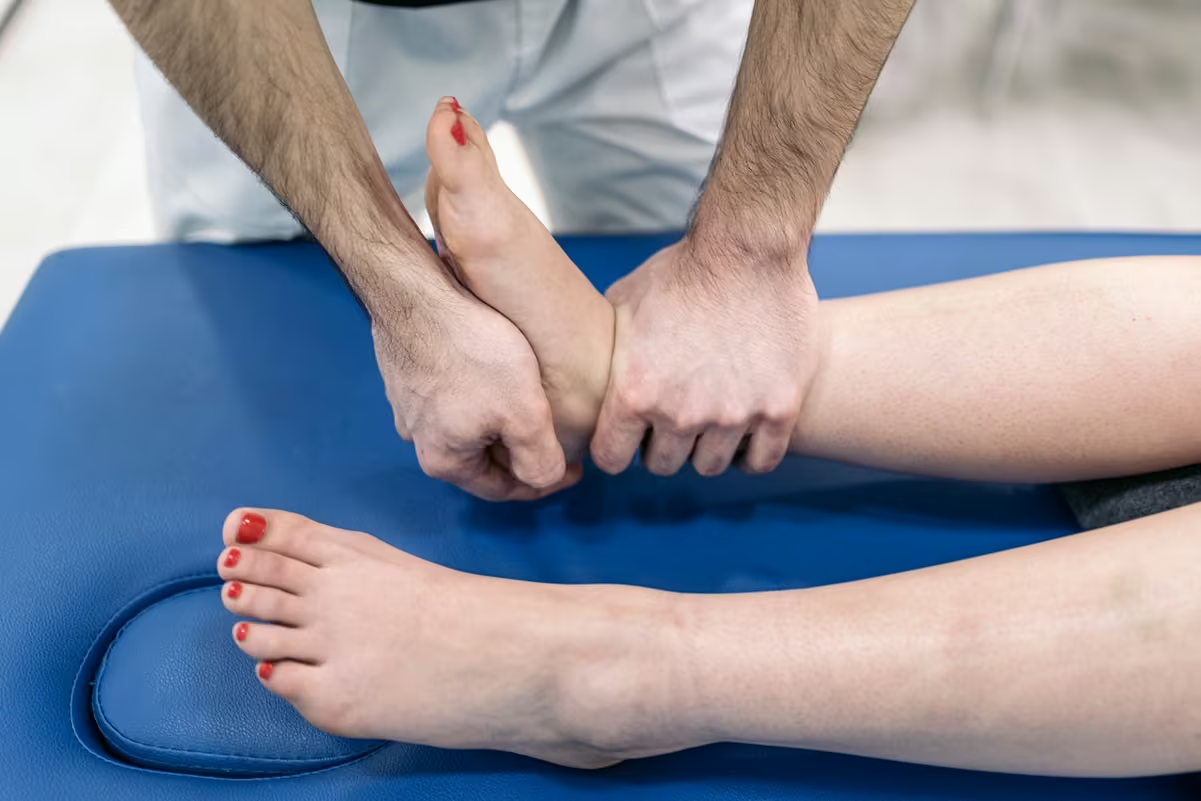
Your appointment includes a hands-on assessment and a detailed ultrasound scan of the ankle. This allows us to evaluate joint inflammation, cartilage thinning, and any irritation of the surrounding tendons. Understanding the source of your pain helps guide safe management and treatment decisions.
Conservative Management
Many patients find relief with conservative measures, which are usually the first step:
- Activity modification to reduce load on the ankle
- Supportive footwear or orthotics to improve comfort and alignment
- Gentle mobility exercises and strengthening of surrounding muscles
- Education and reassurance about progression and long-term care
These measures often help reduce pain, restore function, and support everyday activities without the need for injection.
Ultrasound-Guided Injection
When symptoms persist despite conservative care, an ultrasound-guided injection can help reduce inflammation and improve mobility. The injection is delivered precisely into the most irritated part of the joint and contains both local anaesthetic and steroid. This often allows patients to walk more comfortably and progress safely with strengthening exercises.
Recovery and Ongoing Care
Following assessment and any injection, your clinician will provide guidance on exercise, load management, and activity pacing. Most patients notice gradual improvement in pain, mobility, and comfort over the following days and weeks. The aim is to restore ankle function, reduce discomfort, and help you return to everyday activities or sport with confidence.
Our approach combines accurate diagnosis, targeted treatment, and practical guidance to support long-term joint health and improved comfort.