
Shoulder Bursitis
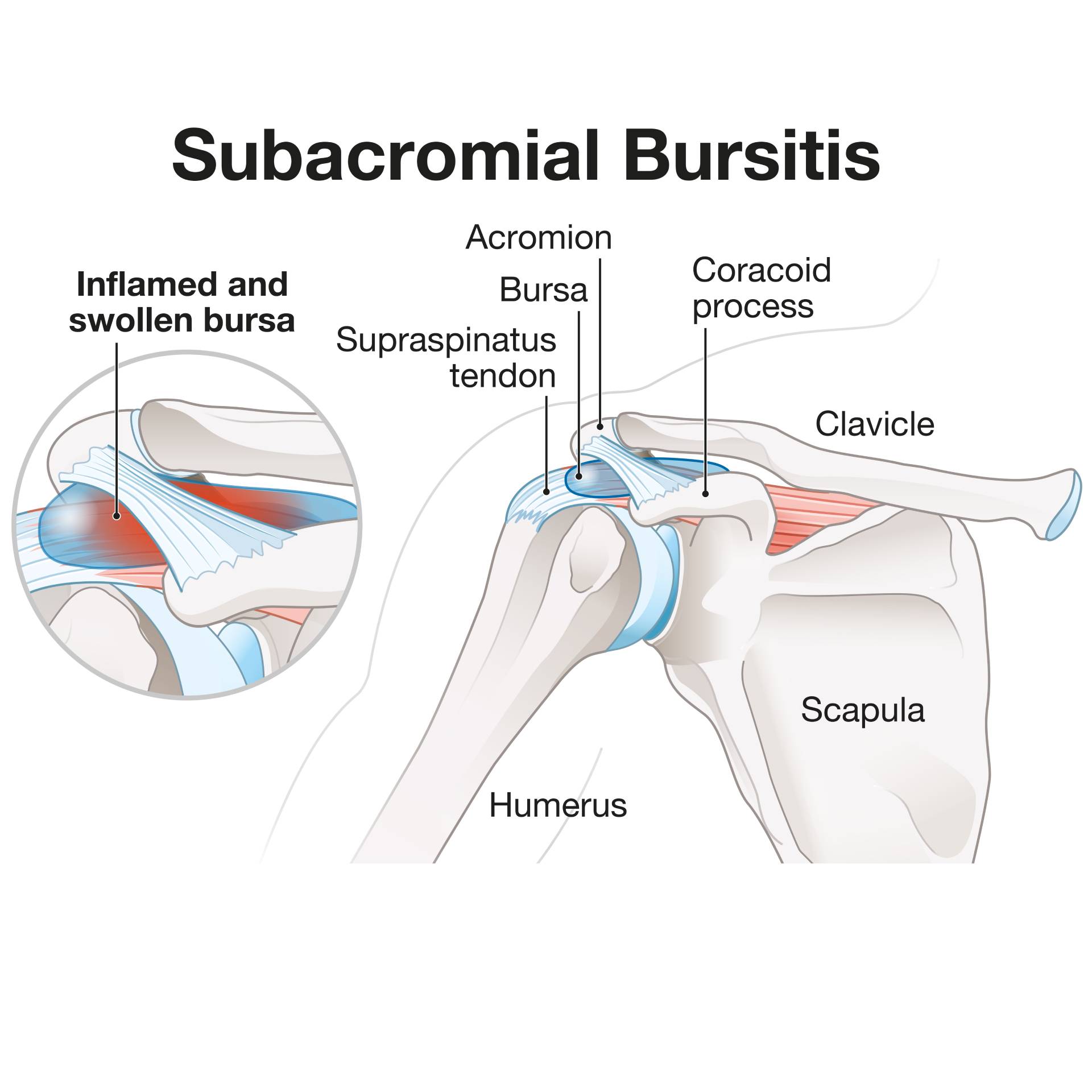
Shoulder bursitis, sometimes called subacromial shoulder pain, occurs when the small fluid-filled sac that cushions the rotator cuff tendons becomes irritated and inflamed. When the bursa swells, it can narrow the space around these tendons and cause impingement, where the tendons or bursa are pinched during normal shoulder movement.
The pain can be sharp or aching, particularly when lifting your arm, reaching overhead, or carrying objects. Everyday tasks such as putting on a coat, washing your hair, or reaching behind you can suddenly feel difficult. Many people also notice discomfort when lying on the affected side, which can disrupt sleep.
At The London Ultrasound Clinic, we provide clear diagnosis and targeted treatment for shoulder bursitis. Your appointment begins with a hands-on assessment and a detailed ultrasound scan to confirm the cause of your pain and check for any tendon or bursa irritation.
Conservative Management
- Rest and activity modification to reduce strain on the shoulder
- Guided physiotherapy to maintain mobility, improve posture, and strengthen supporting muscles
- Reassurance and education about the condition and expected recovery
- Pain relief or anti-inflammatory medication where needed

Ultrasound-Guided Injections
Rehabilitation and Recovery
After an injection, gentle stretching, strengthening, and activity guidance are essential to prevent recurrence and maintain shoulder function. Your clinician will provide clear instructions on safe exercises and strategies to reduce strain on the shoulder.
Our aim is to support your recovery with effective treatment, practical advice, and a calm, reassuring experience, helping you regain comfort, restore movement, and return to everyday activities with confidence.


